By Lisa Fields

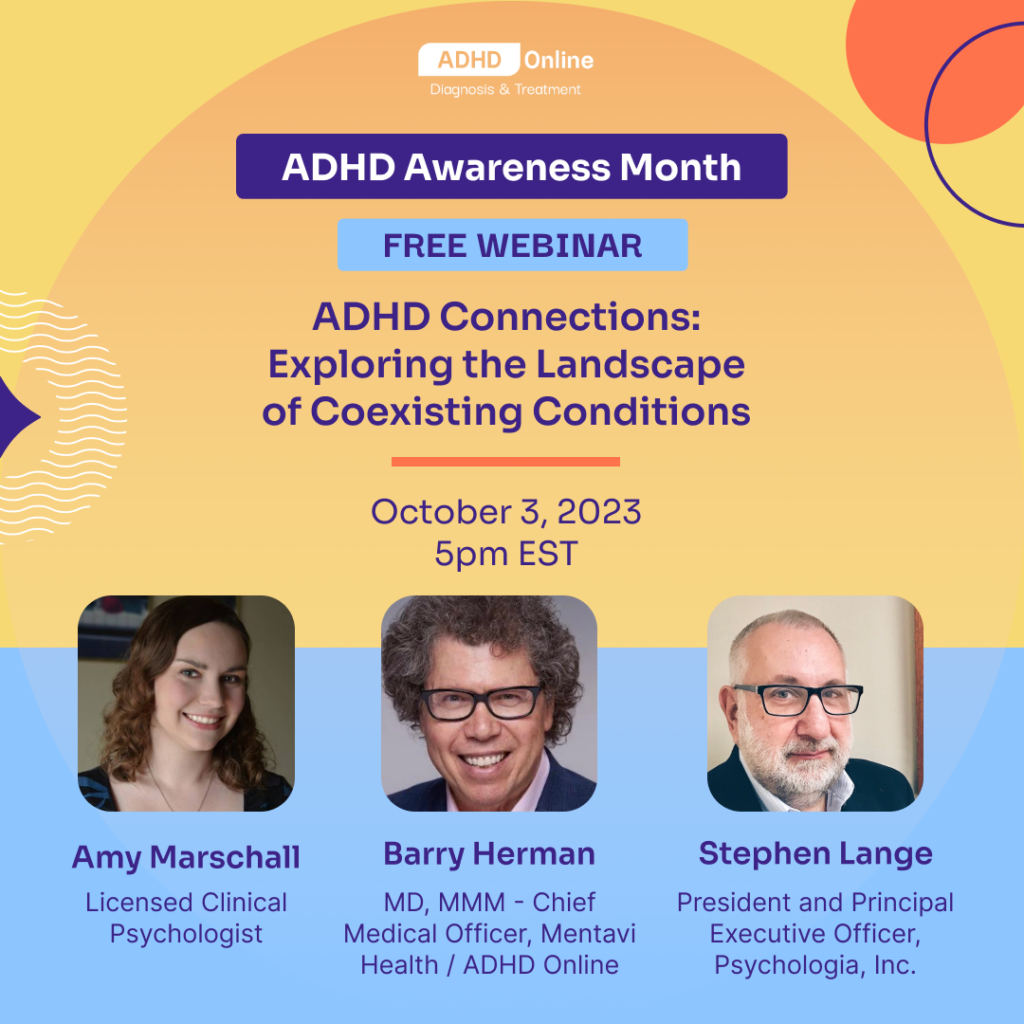
Three ADHD experts answered questions about ADHD and coexisting conditions during an ADHD Online webinar on October 3, the first in a series of webinars for ADHD Awareness Month.
ADHD Online’s Chief Medical Officer Barry K. Herman, M.D., a board-certified psychiatrist, was joined during the webinar by two clinical psychologists who work with ADHD Online, Stephen M. Lange, Ph.D., and Amy Marschall, Psy.D.
The experts talked about depression, anxiety, sleep disorders and other conditions that are commonly diagnosed in people with ADHD. More than two-thirds of people who have ADHD are diagnosed with these or other mental health conditions. Other possible co-existing conditions include obsessive-compulsive disorder and binge-eating disorder.
A careful diagnosis that evaluates symptoms and medical history can determine whether someone has ADHD or another condition, or both.
“There isn’t a specific measure that can definitively say, ‘This test will tell you if you have ADHD,'” Marschall said during the webinar. “It’s a matter of the practitioner being able to determine: Are these criteria met? And that can be through the paper forms, the diagnostic interview (or) other measures that can give us more in-depth information.”
Because some ADHD symptoms — like restlessness and trouble concentrating — may be confused with symptoms of anxiety or depression, healthcare providers may occasionally attribute symptoms of depression or anxiety to ADHD, rather than the correct condition, the experts said. When a person with ADHD also has anxiety or depression but their symptoms are wrongly associated with ADHD, it’s known as diagnostic overshadowing.
“Co-occurring disorders (may) get overlooked, because everything gets attributed to the first diagnosis,” Lange said. “Everybody else I see for treatment later on says, ‘Well, yeah, but that would be your ADHD, wouldn’t it?’ (Or): ‘Oh yeah, that’s an ADHD issue’ — rather than exploring other possible co-occurring disorders.”
When someone with ADHD has anxiety or depression, they may find it more challenging to regulate their emotions. Fortunately, different treatment options should help, the experts said.
“Getting treatment with stimulants or other non-stimulant medications can actually improve emotional dysregulation. Not (for) everyone, but some,” Dr. Herman said. “It’s certainly important to try treatment and see if it does help. And there are other non-medication therapies that you can try, as well.” The most common non-medication therapy is psychotherapy.
ADHD is often associated with sleep disorders, including insomnia. People with ADHD who experience insomnia may be able to improve the quality or quantity of their sleep by practicing good sleep hygiene. Lange recommended exposing yourself to daylight in the morning, getting exercise early in the day, curtailing caffeine intake after 2:30 p.m. and dimming the lights in the evening. If you can’t sleep, get out of bed to read a book until you feel tired, instead of lying in bed frustrated, he recommended.
During the webinar, the experts also answered questions about ADHD and bipolar disorder, sensory processing disorder and autism spectrum disorders.
The second webinar in ADHD Online’s October ADHD series will focus on the connections between ADHD and binge-eating disorder. Dr. Herman will discuss this topic and answer questions from viewers. The webinar will be held on October 11 at 5 p.m. E.T.
This content is for informational purposes only and is not a substitute for professional medical advice, diagnosis, or treatment. Always seek the guidance of a licensed healthcare provider with any questions you may have regarding a mental health condition. If you or someone you know is in crisis, call or text 988 (Suicide & Crisis Lifeline) or call 911 for a medical emergency.