

Conference Reporter | Clinical Conversations
Psychiatric Times | January 17, 2026
Key Takeaways
- Telehealth’s role in ADHD diagnosis is expanding, with nearly half of adults with ADHD using it, yet few studies compare it to traditional methods.
- An online asynchronous assessment for ADHD showed 80% sensitivity and a 95% positive predictive value, with a 12% false positive rate, compared to 56% in clinical interviews.
- The study highlights the variability in ADHD diagnosis approaches and the absence of accessible biomarkers, relying on clinician judgment and DSM-5 criteria.
- The research emphasizes the importance of scientific rigor and human judgment in telehealth, addressing concerns about AI replacing clinical decision-making.
Barry Herman, MD, shares insights on real-world data of online ADHD assessment tool and telepsychiatry.
CONFERENCE REPORTER | CLINICAL CONVERSATIONS
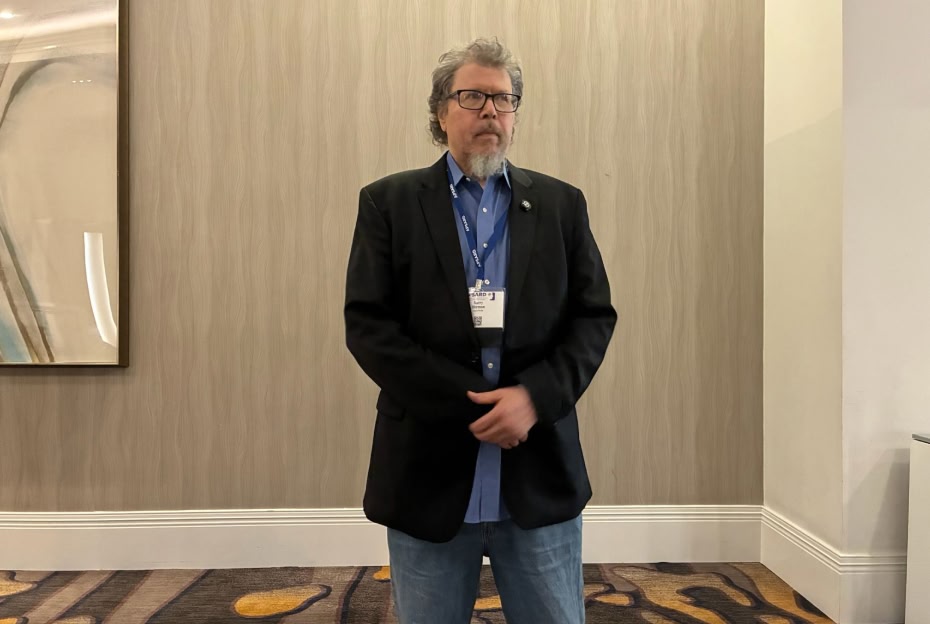
At the American Professional Society of ADHD and Related Disorders (APSARD) 2026 Annual Conference, questions around the role of telehealth in ADHD diagnosis remained front and center, particularly amid ongoing concerns about diagnostic rigor, stimulant prescribing, and the use of emerging technologies.
In a poster presentation addressing some of these issues, Barry K. Herman, MD, MMM, chief medical officer of Mentavi Health, shared real-world data examining the validity of an online asynchronous assessment for diagnosing ADHD in adults.1 The findings arrive at a moment when nearly half of adults with ADHD are using telehealth,2 yet few studies have directly compared telehealth-based diagnostic tools with traditional clinical interviews.
Psychiatric Times spoke with Herman at APSARD about the study’s design, key findings, implications for clinical practice, and how clinicians should think about technology, comorbidity, and human judgment in ADHD care.
Psychiatric Times: Telemedicine for ADHD care has expanded rapidly, but it has also drawn scrutiny. What gap in the evidence were you aiming to address with this study?
Barry K. Herman, MD, MMM: So let me tee this up by saying that telehealth is a technology that’s been around for a long time, but it certainly became more widely used during the COVID pandemic.
And that momentum has really continued because people like telehealth, first of all. Both practitioners and patients really love it because it provides access and convenience, both of which are difficult to achieve in today’s mental health care system.
Our company is really founded on the principle that we wanted to be able to provide accessible and affordable mental health assessment and treatment to anyone, anywhere. The problem was there were a variety of different practices that were being utilized in telehealth, especially in the area of ADHD.
Some of the companies were not really good actors in terms of their approach to both diagnosis and treatment, and it kind of cast a dark shadow on telehealth, especially for ADHD and the prescribing of psychostimulant medicines.
On the flip side, the Centers for Disease Control and Prevention issued a report last year that showed that of adults with ADHD, 46% of them were using telehealth.2 And nobody had ever actually studied how accurate, valid, and reliable diagnosis via telehealth of ADHD in adults was compared to the current standard of care in clinical practice, which is a clinical interview performed by a licensed mental health professional.
So we set about to conduct a study to compare our diagnostic evaluation with the current standard of care, which is a clinical interview. The results were reported at the end of 2024.
And then this last year, in 2025, we began to disseminate those data both with poster abstract presentations, but most importantly, we were published in the Journal of Clinical Psychiatry last fall in September.3
We’re here at APSARD now to present the data from that study. I think this is a really important place to be able to get our work some exposure and to be able to get some feedback from our colleagues about the study itself.
PT: For clinicians evaluating the study findings, what should they know about how the study was designed?
Barry K. Herman, MD, MMM
Herman: This was a real-world study; it was conducted largely off of our own treatment platform.
We had some really good collaborators on the study: Stephen V. Faraone, PhD, Andrew J. Cutler, MD, and Jeffrey H. Newcorn, MD, were among the co-authors.
So we’re very excited about the fact that they recognized the importance of the study and also were so helpful to us in ensuring that we approach this the right way.
PT: What were the most clinically meaningful findings to emerge from the data?
Herman: We were delighted to see that there was a high degree of agreement between our diagnostic evaluation and a diagnostic clinical interview. We showed 80% sensitivity, a positive predictive value of 95%.
We had a very low false positive rate for our diagnostic evaluation—only 12%, compared to 56% for the clinicians who were conducting the clinical interview.
And that says a lot. It speaks a lot to what is going on in the real world with diagnosis of ADHD. There’s a tremendous amount of variability in the approach to diagnosis. Many different kinds of health care professionals are doing the diagnoses, many of them who don’t have sufficient background, training, and expertise.
I think it’s important to point out, currently, there are no accessible biomarkers to diagnose ADHD; no blood tests, neuroimaging studies, psychometric tests that are going to definitively make a diagnosis. Although there are genetic markers, they’re not widely available for general use. Hopefully in the future we’ll see some advances in that.
So right now we’re relying on the judgment of clinicians who conduct a clinical interview, structured or otherwise, and then compare the criteria in the DSM-5 for ADHD with their findings.
This was the first study of its kind to actually demonstrate the validity of an online asynchronous assessment for diagnosing ADHD in adults. And we’re really proud of that. We feel like we’re trying to set a standard of evidence and scientific rigor to the rest of the field, and we’re hoping that this will not only advance the field in terms of diagnosing ADHD in adults, but also really advance the field of telehealth, which is really largely untapped and unstudied at this point.
PT: Given how frequently ADHD co-occurs with other psychiatric conditions, how does the tool account for diagnostic complexity?
Herman: Eighty percent of patients with ADHD have at least 1 psychiatric comorbid condition.
We actually do try to tease out what’s contributing to what, but we definitely have the ability to be able to diagnose the more commonly associated mental health conditions with ADHD.
And then our clinicians, or whoever is going to use the diagnostic evaluation for the purposes of treatment, can use those data to help them in their further exploration in teasing out the clinical presentation.
PT: Many clinicians have expressed concern about artificial intelligence replacing clinical judgment. How should readers think about the role of AI in this model?
Herman: First of all, our company has been very proactive in addressing this issue. We actually have an AI ethics committee that we’ve established.
There’s no aspect of what we do in terms of diagnosis and treatment that doesn’t involve a human being. So these are not chatbots and AI that are making diagnoses. These are real humans that are taking the data that we collect and rendering their own human, clinical judgment.
And I also want to kind of lay down a challenge to everyone that’s doing telehealth right now to really take a scientific, evidence-based approach with good clinical oversight.
PT: Finally, on a personal level, what continues to motivate you in this work?
Herman: Well, I went to medical school to help people. And I spent about 20 years in the pharmaceutical industry, but now I’m back much closer to the individual patient encounter. So I’m really feeling it in terms of helping people every day.
And that’s really been kind of my mantra: trying to improve the lives of people and their families. And I’m very thankful to have this opportunity to be able to do that.
Stay updated with Psychiatric Times for more expert insights and emerging data from the APSARD 2026 Annual Conference.
References
1. Herman B. Validity of an online assessment of attention-deficit/hyperactivity disorder among a real world sample of adults seeking web-based mental health care. Poster presented at the APSARD 2026 Annual Conference; January 15-18, 2026; San Diego, CA.
2. Staley BS, Robinson LR, Claussen AH, et al. Attention-Deficit/Hyperactivity Disorder Diagnosis, Treatment, and Telehealth Use in Adults — National Center for Health Statistics Rapid Surveys System, United States, October–November 2023. MMWR. 2024;73(40).
3. Herman BK, Faraone SV, Cutler AJ, et al. Validity of an Online Assessment of Attention-Deficit/Hyperactivity Disorder Among a Real-World Sample of Adults Seeking Web-Based Mental Health Care. J Clin Psychiatry. 2025;86(3):25m1
This content is for informational purposes only and is not a substitute for professional medical advice, diagnosis, or treatment. Always seek the guidance of a licensed healthcare provider with any questions you may have regarding a mental health condition. If you or someone you know is in crisis, call or text 988 (Suicide & Crisis Lifeline) or call 911 for a medical emergency.